

I’ll be honest—before discovering the Conscious Spending Plan (CSP), I was trapped in the never-ending cycle of traditional budgeting. I tracked every penny like a hawk, only to feel guilty every time I bought something I enjoyed. But then I stumbled upon Ramit Sethi’s approach, and suddenly, managing my money became a lot more fun and way less stressful. The best part? I was still able to enjoy my guilty pleasures without feeling like I was sabotaging my financial future. The Conscious Spending Plan changed everything, and I’m excited to share how this revolutionary approach can help you, too. It’s all about aligning your spending with your values and goals, freeing you from the guilt typically associated with budgeting.
So, let’s break it down, step by step.
What is the Conscious Spending Plan?
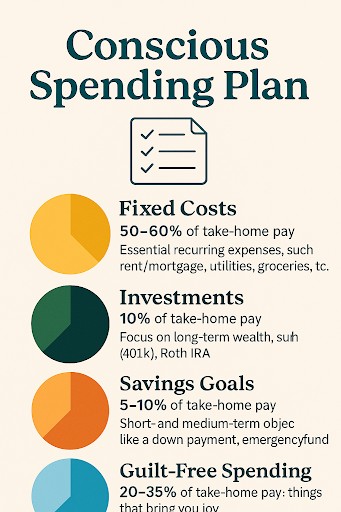
The Conscious Spending Plan (CSP) is Ramit Sethi’s game-changing approach to personal finance.
Instead of restricting yourself with a rigid budget, the CSP focuses on aligning your spending with your values and long-term goals. You prioritize what truly matters to you—whether that’s travel, family time, or investing in your future—and spend guilt-free on things that bring you joy. The CSP allows you to live well now, while also building wealth and security for later. It’s all about intentional choices that reflect your unique values and aspirations, without the stress or shame associated with traditional budgeting.
How Do You Start Creating Your Own Conscious Spending Plan?

Step 1: Identify What Truly Matters to You
Before you even look at your bank account, sit down and think about what you value most in life. Is it traveling? Maybe it’s saving for a home or funding your retirement.
What makes you happy and aligns with your long-term financial aspirations? Once you have that clarity, you’ll know where to direct your energy (and money).
Step 2: Categorize Your Spending
Now that you’ve defined your values, it’s time to break down your spending into four key buckets:
- Fixed Costs (50-60% of your income): This includes essential, recurring expenses like rent, utilities, insurance, groceries, and transportation.
- Investments (10% of your income): This is your future self talking. You’ll want to allocate this portion to long-term wealth building—think retirement savings like a 401(k) or a Roth IRA.
- Savings Goals (5-10% of your income): These are your shorter-term financial goals, whether it’s an emergency fund, a vacation, or saving for a down payment on a house.
- Guilt-Free Spending (20-35% of your income): This is the fun part. Use this category to spend freely on things that bring you joy, from dining out to buying that fancy gadget you’ve had your eye on. The key here is to align this spending with your values—guilt-free!
Step 3: Automate Your Finances
Let’s be real: Willpower only gets you so far. Once you’ve set your categories, make life easier by automating your savings, investments, and bill payments. Set up automatic transfers so you’re not constantly thinking about moving money around.
Step 4: Track Your Progress and Adjust
Life changes, and so should your spending plan. Whether you get a raise, face a life transition, or hit a new milestone, be sure to check in on your spending and adjust accordingly. You want your plan to reflect your evolving goals.
What is the 50/30/20 Spending Rule?

The 50/30/20 rule is a simple guideline for managing your income. You divide your after-tax income into three broad categories:
- 50% for needs—these are your essential expenses, like rent, utilities, and transportation.
- 30% for wants—this is where you spend on non-essentials that make life enjoyable, like dining out or hobbies.
- 20% for savings and debt repayment—this portion helps build your financial future.
While the 50/30/20 rule is a great starting point for budgeting, it doesn’t provide the same personalized flexibility as the Conscious Spending Plan, which allows for more nuanced spending based on your unique priorities.
Can the Conscious Spending Plan Really Help You Achieve Financial Freedom?

In short—absolutely. The Conscious Spending Plan is about gaining control over your money, not feeling controlled by it. It encourages mindful spending on things that matter, all while giving you the flexibility to enjoy life without worrying about falling off track financially.
Unlike restrictive budgeting, the CSP lets you spend extravagantly on what you love (yes, guilt-free shopping or weekend getaways), while still taking care of the things that truly matter—like investing in your future.
It’s the sweet spot where financial discipline meets freedom, and it’s completely customizable as life changes.
What Happens If You Don’t Follow the Conscious Spending Plan?

You’ll likely find yourself drifting back into old habits. Without intentionality, money can slip through your fingers faster than you think.
With the CSP, you’re always aligned with your values and goals, and that alignment is what makes it sustainable. If you don’t stay on top of your finances, you may find that you’re spending too much on things that don’t bring you long-term happiness, which can lead to stress and regret.
But don’t worry—it’s not all doom and gloom.
The beauty of the Conscious Spending Plan is that you’re constantly learning and adjusting, so even if you slip up, it’s just a chance to realign and try again.
What is the Difference Between a Budget and the CSP?

A traditional budget typically breaks down your expenses into specific categories and limits how much you can spend in each. It’s often about restriction—cutting back on things you enjoy in favor of sticking to a set number. The Conscious Spending Plan, on the other hand, flips that mindset on its head.
Instead of feeling deprived, the CSP encourages you to focus on what you care about. It’s not about limiting spending in every category but rather about choosing to spend more in areas that align with your values—whether that’s investing more in your future or splurging guilt-free on experiences.
In short, the CSP is a more flexible, value-driven approach that lets you live life fully while keeping your financial goals in check.
Frequently Asked Questions
Q: Can I use the Conscious Spending Plan if I have debt?
A: Absolutely! In fact, the Conscious Spending Plan can help you prioritize debt repayment by aligning your spending with your goals. Allocate part of your savings goal category to pay down debt, and once it’s gone, you can shift those funds toward other goals like investing or saving for a home.
Q: How do I deal with the temptation to overspend in the guilt-free spending category?
A: Great question! The key here is moderation. Set limits based on your overall financial picture, so that guilt-free spending doesn’t completely throw off your goals. Remember, it’s about balance—spending on what you love, but also ensuring you’re still building your future.
Q: Is the Conscious Spending Plan hard to stick to?
A: It’s easier than you think! Once you’ve automated your finances and categorized your expenses, it becomes second nature. Plus, you’ll feel less guilty about spending money on things that truly align with your values, so it’s easier to stay on track.
Q: How often should I review my plan?
A: Regular check-ins are a good idea. Review your plan quarterly or whenever there’s a significant life change—like a new job or a big financial goal achieved. This keeps your plan fresh and aligned with where you are in life.
Make Your Money Work For You, Not Against You
At the end of the day, the Conscious Spending Plan is all about living a life that feels both financially smart and emotionally satisfying.
It’s a sustainable approach to managing money that lets you align your spending with your core values, so you can build wealth and enjoy your life along the way. So, what’s stopping you? Start thinking about what you truly value, categorize your spending, and get on the path to financial freedom. Trust me, you won’t look back.


